Understanding Pneumonia Symptoms and When to Seek Medical Help
Pneumonia is an infection that inflames the air sacs in one or both lungs, which may fill with fluid or pus. It can range from mild to life-threatening, affecting anyone from infants to the elderly. Recognizing the early pneumonia symptoms is crucial for timely treatment and preventing complications. At Kennesaw Primary Care, we emphasize understanding your body's signals to ensure you get the care you need when you need it.
Common Pneumonia Symptoms to Watch For
The signs and symptoms of pneumonia can vary, depending on the type of germ causing the infection, your age, and your overall health. However, some common indicators can help you identify a potential chest infection. Typical respiratory symptoms include:
Cough: Often producing phlegm (mucus) that may be greenish, yellow, or even bloody.
Fever: Accompanied by sweating and chills.
Shortness of Breath: Especially during activities or even at rest.
Chest Pain: Sharp or stabbing pain that worsens when you breathe deeply or cough.
Beyond respiratory distress, other general body symptoms can signal pneumonia:
Fatigue: Persistent tiredness and lack of energy.
Nausea, Vomiting, or Diarrhea: More common in children.
Headache and Muscle Aches: Generalized body discomfort.
Loss of Appetite: A common systemic response to infection.
Understanding Different Types and Causes of Pneumonia
Pneumonia can be caused by various pathogens, leading to different presentations. Knowing the potential causes can sometimes inform the course of treatment.
Bacterial Pneumonia: This is often the most serious type, developing suddenly with high fever, rapid breathing, and a severe cough. Streptococcus pneumoniae is a common culprit.
Viral Pneumonia: Frequently caused by the same viruses that cause the flu or common cold. Symptoms tend to be milder initially but can worsen over time.
Fungal Pneumonia: More common in people with chronic health problems or weakened immune systems.
Aspiration Pneumonia: Occurs when food, drink, vomit, or saliva is inhaled into the lungs.
When Pneumonia Symptoms Warrant Immediate Medical Attention
While some cases of pneumonia can be mild, others require urgent care. It's essential to know the pneumonia warning signs that indicate a need to seek medical help promptly. Do not delay if you experience:
Difficulty breathing or shortness of breath worsening.
Chest pain that is severe or persistent.
Fever of 102°F (39°C) or higher.
Persistent cough, especially if producing discolored or bloody mucus.
Confusion or changes in mental awareness, particularly in older adults.
Bluish tint to lips or fingernails (cyanosis).
If you or a loved one exhibit these severe pneumonia symptoms, particularly if you are in a high-risk group (young children, older adults over 65, individuals with chronic conditions like asthma, heart disease, or diabetes, or those with weakened immune systems), contact Kennesaw Primary Care immediately or seek emergency care. Our dedicated acute & chronic care services are designed to address urgent health concerns like this.
Diagnosis and Treatment at Kennesaw Primary Care
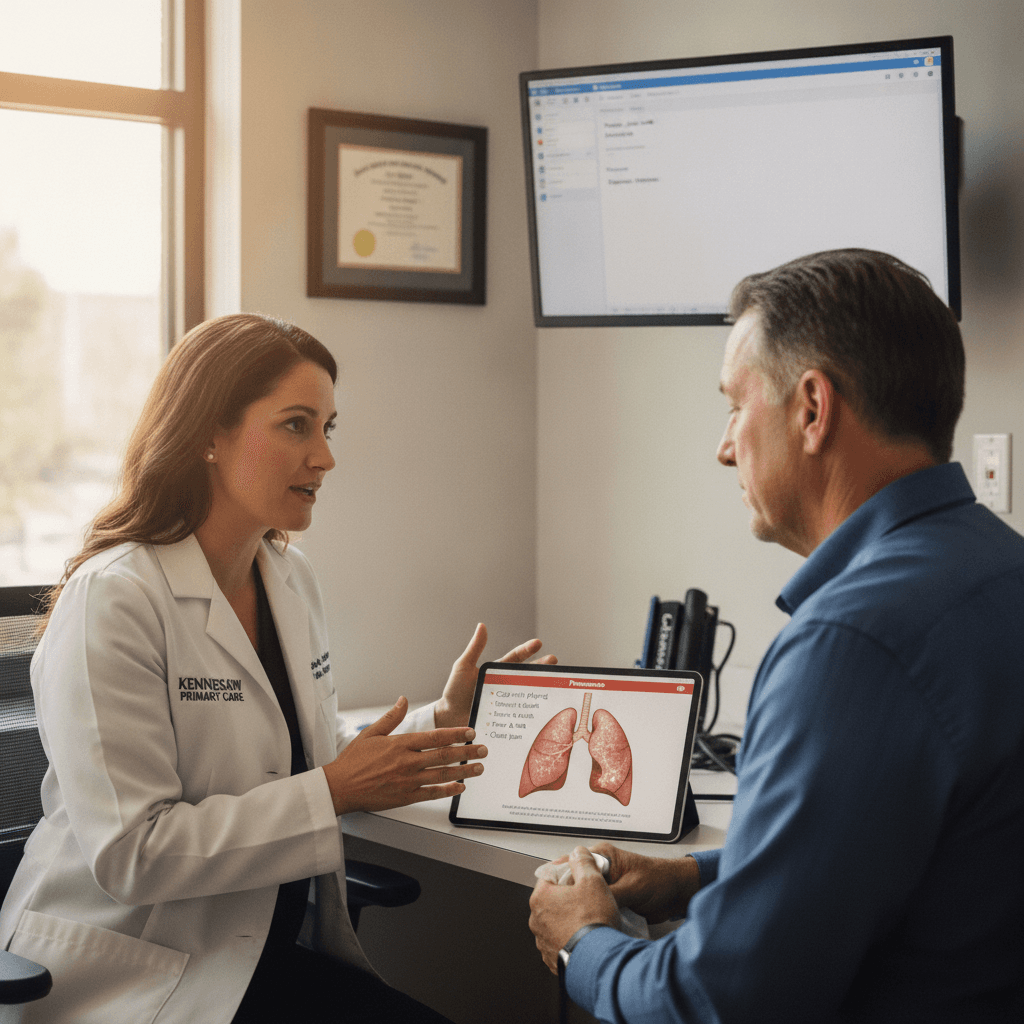
When you visit Kennesaw Primary Care with suspected pneumonia, our experienced team of providers will conduct a thorough examination. This typically involves listening to your lungs, reviewing your medical history, and potentially ordering diagnostic tests such as a chest X-ray, blood tests, or sputum cultures to identify the specific cause of your chest infection symptoms. Accurate diagnosis is key to effective pneumonia treatment.
Treatment for pneumonia depends on its type and severity. Bacterial pneumonia is typically treated with antibiotics, while viral pneumonia may require antiviral medications and supportive care. In all cases, rest, fluids, and managing fever are crucial. Our providers will work with you to create a personalized treatment plan and offer guidance on managing symptoms and recovery.
Preventing Pneumonia: A Proactive Approach
While not all cases are preventable, certain measures can significantly reduce your risk. These include getting vaccinated (flu shot, pneumococcal vaccine), practicing good hygiene (handwashing), not smoking, and managing chronic health conditions. Kennesaw Primary Care is committed to your overall wellness, offering preventive & routine care to help you stay healthy.
If you're concerned about pneumonia symptoms or simply wish to discuss preventive strategies, don't hesitate to contact us. Your health is our priority, and we're here to provide expert, compassionate care to the Kennesaw community.